
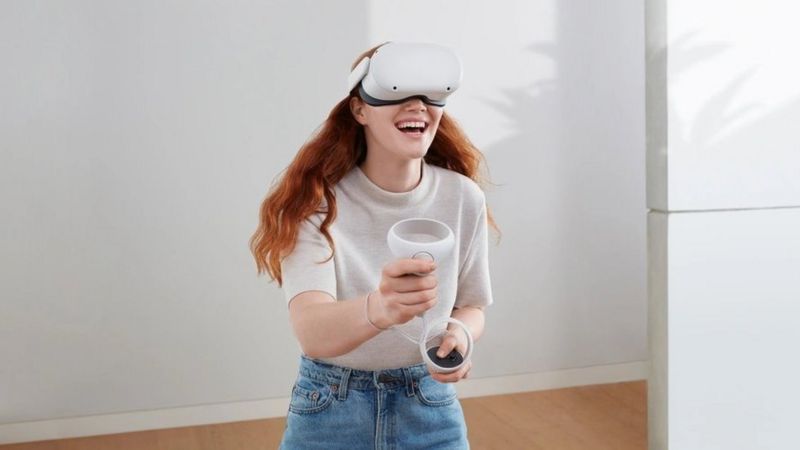
The metaverse is a new kind of 3D internet that brings together the real and digital worlds into one place that everyone can visit and enjoy. People don’t just look at things on a screen; they “live” in the metaverse, where they can use avatars and technologies like Virtual Reality (VR) and Augmented Reality (AR) to interact with other people and digital objects in real time. It won’t just be a place to play games with friends anymore; by 2026, it will also be a tool for business, education, and trade.
What is the metaverse?
The metaverse is a shared 3D space where people can talk to each other in real time using digital avatars. It uses technologies like virtual reality (VR), augmented reality (AR), artificial intelligence (AI), and blockchain to make environments that are both immersive and interactive. The metaverse is different from the regular internet because it is three-dimensional (like webpages and apps). Users feel like they are really in a digital world.
It is also persistent, which means it stays around even when users log off. Experts think that the metaverse is the next step in the evolution of the internet. Some say that by 2026, about 25% of people may spend at least one hour a day in these kinds of virtual worlds.
Related: Facebook’s Smart Glasses
Key Features of the Metaverse
The metaverse is defined by several core characteristics that distinguish it from current digital platforms:
1. Immersive Experience
Users can enter realistic 3D environments using VR headsets or even smartphones, creating a sense of presence inside the digital world.
2. Real-Time Interaction
People communicate, attend events, and collaborate instantly through avatars, making social interaction more engaging than traditional social media.
3. Digital Economy
The metaverse enables buying, selling, and owning virtual assets such as land, clothing, and NFTs, forming a new digital marketplace.
4. Interoperability
Users can move their digital identities, assets, and experiences across different platforms, although this is still under development.
5. User-Generated Content
Individuals can create their own virtual spaces, games, and experiences, making the metaverse a participatory ecosystem.
How the Metaverse Can Change Our Lives
1. Revolutionizing Communication
The metaverse can transform communication by allowing people to meet in virtual spaces rather than just text or video calls. This creates more natural and engaging interactions, especially for remote work and global collaboration.
2. Transforming Education
Students can learn in immersive virtual classrooms, explore historical events, or conduct science experiments in simulated environments. This can make education more interactive and accessible worldwide.
3. Changing Work and Business
Companies can hold virtual meetings, build digital offices, and collaborate globally. New job roles such as virtual designers, digital architects, and metaverse developers are also emerging.
4. New Economic Opportunities
The metaverse is creating entirely new industries, including virtual real estate, digital fashion, and online event management. These opportunities allow individuals to earn real income in virtual environments.
5. Enhancing Entertainment and Gaming
Gaming is already one of the biggest drivers of the metaverse. Platforms like virtual worlds and social VR spaces offer concerts, events, and interactive experiences that go beyond traditional entertainment.
6. Improving Healthcare
Doctors can use virtual environments for training, therapy, and remote consultations, improving access to healthcare services globally.
Latest Developments in 2026
Recent trends show that the metaverse is still evolving. Major tech companies are adjusting their strategies, with some shifting focus toward AI and mobile-based virtual experiences instead of fully immersive VR worlds. This indicates that while the metaverse is promising, it is still in a development phase and may take years to reach its full potential.
Related: The magic of the Internet world.
Conclusion
The metaverse is a brave vision of the future internet—one that is immersive, interactive, and a big part of daily life. It could change how people talk to each other, learn, do business, and have fun all over the world. But it will only work if technology gets better, ethical issues are taken into account, and it is easy for everyone to use. The metaverse could either become a revolutionary digital ecosystem or slowly grow alongside other technologies as we move forward. This will change how we live, work, and connect in the years to come.