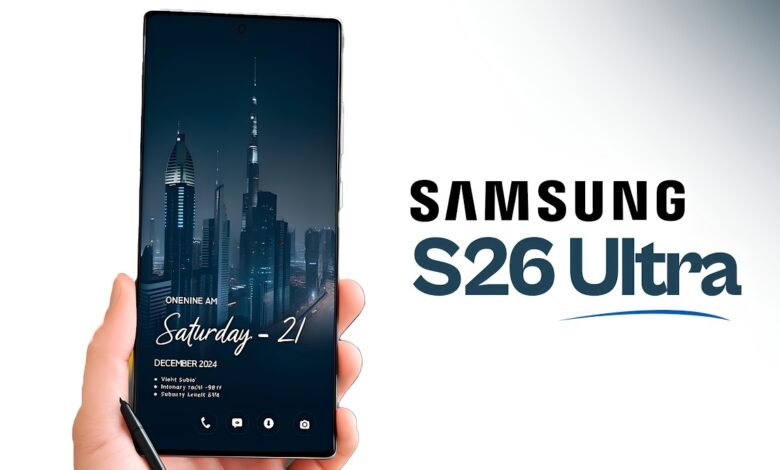
Every year, Samsung’s flagship launch turns into two product stories at once: the phone you can buy, and the chipset inside it. For many buyers, the debate is simple—Snapdragon or Exynos—but the implications are anything but. The chipset influences everything you actually feel day to day: how fast apps open, how stable gaming performance stays after 20 minutes, how well the camera pipeline processes HDR, and whether battery drain spikes on 5G.
As the Samsung Galaxy S26 rumor cycle heats up, early “alleged” benchmark sightings are doing what they always do—lighting up forums, igniting regional frustration, and pushing people to ask the same question: Is Samsung’s in-house silicon finally closing the gap, or is Snapdragon still the safer bet? Recent reports point to the Galaxy S26 and Galaxy S26 Ultra appearing on Geekbench with a Snapdragon chip in at least some listings, including claims of an “underclocked” configuration in those early database entries.
At the same time, other coverage suggests Samsung may again split chipsets by market—some regions getting Snapdragon, others getting Exynos—a strategy that has shaped perception of Galaxy flagships for years. If these alleged tests are even directionally accurate, they hint at a familiar outcome: Snapdragon still beating Exynos in the benchmark narrative—at least in the leaks that are currently making the rounds.
But raw scores don’t equal real life. So below, we’ll break down what the leaked Galaxy S26 benchmarks appear to show, what they don’t prove, and what actually matters if you’re choosing between variants.
The alleged Galaxy S26 benchmarks: what’s been spotted so far
The most attention-grabbing claims right now come from reports that the Samsung Galaxy S26 series has shown up on Geekbench, revealing a Snapdragon chip that may be underclocked in those early results. That “underclocked” detail matters, because benchmark databases often capture engineering samples, early firmware, or power profiles that Samsung later tunes before launch.
Meanwhile, broader rumor roundups suggest the processor story could be region-dependent again—Galaxy S26 Benchmarks Suggest Snapdragon for most markets, Exynos in select regions like South Korea (and potentially others depending on yields and supply). That’s key context: if you’re seeing one leaked score, it may not represent the model you’d buy in your country.
Why “alleged” matters with benchmark leaks
Benchmark leaks are useful, but messy:
Device identity can be unclear (prototype model numbers, placeholder names).
Software is unfinished (performance governors change dramatically late in development).
Thermals aren’t final (cooling systems and chassis design affect sustained performance).
Single runs get amplified (one strong or weak sample becomes “the truth”).
So when leaks say Snapdragon is still ahead, treat it as a signal, not a verdict.
Geekbench and why it shapes the Snapdragon vs Exynos narrative
Geekbench is popular because it’s easy to run and produces a familiar pair of headline numbers:
Single-core: how snappy the phone feels in light tasks, UI, browsing, and quick app loads.
Multi-core: heavier workloads like video export, on-device AI features, and sustained multitasking.
But Geekbench is still a synthetic benchmark. It’s a snapshot of CPU capability under a specific configuration at a specific moment. A phone that “wins” Geekbench can still lose in:
gaming stability (GPU throttling),
camera processing speed,
modem efficiency on 5G,
or battery endurance in mixed use.
That’s why the smarter read of the Galaxy S26 benchmarks is trend-based: if multiple independent listings consistently show Snapdragon scoring higher across different runs, it suggests a real performance edge may exist—especially early in a product cycle.
Why Snapdragon often leads in early benchmarks
If the leaks are trending toward Snapdragon on top again, there are several practical reasons this happens—even before we argue about architecture.
1) Maturity and tuning advantage
Qualcomm’s flagship Snapdragon platform usually benefits from:
mature scheduling and performance tuning,
well-optimized GPU drivers (especially for popular engines),
and consistent partner support across Android OEMs.
Early Galaxy firmware tends to prioritize stability and power targets first, then unlock more aggressive performance later. If an Exynos build is still being tuned, early results can look weaker than final retail behavior.
2) Sustained performance and thermals
Even if Exynos matches Snapdragon in a short CPU burst, sustained performance can diverge once heat builds. A chipset that manages thermals efficiently (plus better power control) can keep clocks higher for longer—often the difference between “benchmarks look close” and “gaming stays smooth.”
3) Modem and efficiency perceptions
Historically, the wider conversation has included complaints that some Exynos variants trail Snapdragon in efficiency and radio performance. Whether that repeats for the Samsung Galaxy S26 depends on Samsung’s newest silicon and fabrication progress—but perception alone affects demand and resale value, which is why the debate keeps returning.
What Samsung claims for Exynos this time
Samsung’s official chipset page describes Exynos 2600 as a next-generation mobile SoC built on a 2nm GAA process, highlighting a deca-core Arm CPU, NPU focus, and “Xclipse” GPU branding. On paper, that’s exactly the kind of leap that could narrow the gap—or even flip it in some areas like AI throughput.
And to be fair, not all leaks paint Exynos as behind. Some coverage has circulated alleged Geekbench screenshots implying Exynos 2600 could score extremely high, even claiming it edges a Snapdragon rival in certain tests—though those claims are still debated and should be treated cautiously.
So why are people still saying Snapdragon is beating Exynos? Because the most recent “device spotted” narrative around the Galaxy S26 benchmarks is currently centered on Geekbench listings that show Snapdragon inside the S26 family (and not definitively showcasing Exynos winning inside a shipping Galaxy configuration).
The chipset split rumor: why your region could decide your experience
Multiple reports suggest Samsung may use different chips for different markets again, with Snapdragon more widely used and Exynos appearing in select regions.
This matters for two reasons:
Reviews may not match what you buy.
If U.S. reviewers test a Snapdragon model and you purchase an Exynos model, performance, battery, and thermals can differ.Community benchmarks become confusing.
People compare screenshots without realizing they’re not comparing the same hardware or firmware maturity.
If the split happens, the smartest buying strategy is simple: wait for region-specific reviews and sustained tests (gaming loops, camera stress tests, and battery drain on 5G), not just a single Geekbench chart.
Beyond benchmarks: what actually affects daily performance on the Samsung Galaxy S26
Here’s what will likely matter more than a few hundred benchmark points.
Gaming and GPU stability
Many users care less about peak scores and more about whether frame rates stay stable after the phone heats up. Look for:
sustained FPS tests,
GPU throttling charts,
and long-session temperature tracking.
Camera pipeline and ISP behavior
The best “camera phone” isn’t only sensors—it’s compute:
HDR merging speed,
night mode consistency,
and video stabilization load.
A Snapdragon advantage (or Exynos catch-up) may show up here more than in CPU-only benchmarks.
Battery life and 5G efficiency
If Samsung’s Exynos truly benefits from 2nm GAA, it could improve endurance—but real-world battery depends on:
display tuning,
modem behavior in weak signal,
background AI features,
and thermal management.
So… is Snapdragon still beating Exynos in the alleged S26 leaks?
Based on the most recent reporting about Geekbench sightings of the Galaxy S26 series—particularly the emphasis on a Snapdragon configuration appearing (even underclocked) in those listings—the current leak narrative still leans toward Snapdragon being the safer performance bet.
However, there’s a real twist: separate leaks and commentary also claim Exynos could be far more competitive this generation, with some alleged benchmark screenshots suggesting very strong numbers. That’s why the best conclusion today is nuanced:
Short-term leak headlines: favor Snapdragon.
Underlying silicon story: Exynos may be improving meaningfully, but proof requires retail devices and sustained testing.
What to watch next before you choose Snapdragon or Exynos
If you want to make a confident call, watch for these specific signals as launch approaches:
Multiple consistent Geekbench listings per chipset (not one-off screenshots).
Sustained performance tests (20–30 minute gaming loops).
Battery drain comparisons on 5G (especially in weak signal conditions).
Thermal camera testing (where heat concentrates and how fast it rises).
Camera processing speed in repeated HDR/night shots.
When those arrive, we’ll know whether Snapdragon simply wins the first round of leaks—or wins the generation.
Conclusion
Right now, alleged Galaxy S26 benchmarks and Geekbench sightings keep the spotlight on Snapdragon, reinforcing the idea that Qualcomm may still hold the edge—especially in the early leak cycle. But Samsung’s own positioning for Exynos 2600 and the chatter around major improvements suggest this might be the closest matchup in years.
If you care about practical performance, don’t buy a flagship based solely on early charts. Wait for region-matched reviews, sustained testing, and battery data—because the phone you use every day is shaped less by a peak score and more by stability, efficiency, and tuning.
FAQs
Q: Will the Samsung Galaxy S26 use Snapdragon or Exynos?
Rumors suggest a split again, with Snapdragon in many markets and Exynos in select regions, but final availability may depend on supply.
Q: Are the leaked Galaxy S26 benchmarks reliable?
They’re useful indicators, but still “alleged.” Early benchmark listings can involve prototypes, unfinished software, or unusual clock settings.
Q: Why would an “underclocked” Snapdragon show up on Geekbench?
Engineering samples often run conservative clocks for stability and thermals. Later firmware can change performance profiles significantly.
Q: Could Exynos beat Snapdragon this generation?
Possibly in specific workloads. Some alleged leaks suggest very strong Exynos scores, but those claims need validation on retail devices.
Q: What matters more than benchmarks when choosing Snapdragon vs Exynos?
Sustained gaming performance, battery endurance on 5G, thermal throttling behavior, and camera processing consistency usually matter more than a single synthetic score.
Also Read: Which Is Better: Galaxy A53 5G or Galaxy A33 5G?