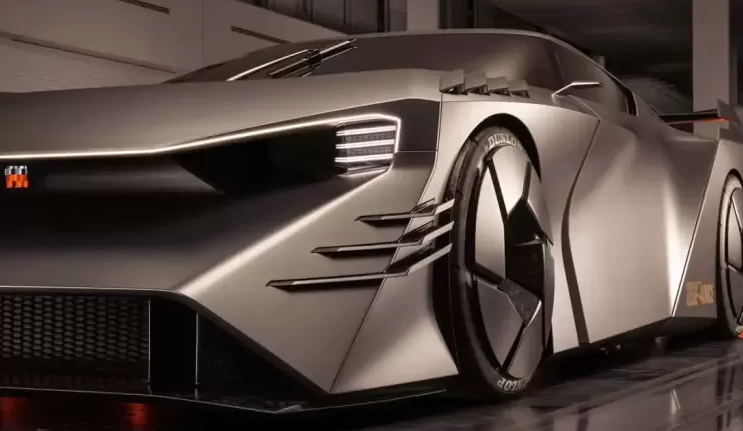
The Nissan GT-R has been a legend on the road and racetrack for nearly two decades. After the final R35 model rolled off the production line in 2025, fans of this iconic “Godzilla” were left wondering: would Nissan ever bring it back? The answer is yes—and the news is even better than you might expect. The next-generation Nissan GT-R (R36) is officially in development and will arrive before 2030 with a hybrid powertrain, according to Nissan North America’s Chief Planning Officer.
This isn’t just a simple revival. The new GT-R will be a completely reimagined machine that blends the best of what made the original legendary with cutting-edge technology for the modern era. Let’s explore what we know about this exciting comeback and what it means for performance car enthusiasts.
What We Know About the R36 GT-R Timeline
Nissan has given us a clear roadmap for the GT-R’s return. According to Ponz Pandikuthira, Nissan’s Chief Planning Officer, the company will share concrete announcements about the R36 GT-R around 2028, with the actual car arriving sometime before 2030. This gives us roughly three to four years to wait for official details and a few more years before we see it on the road.
Why the Long Development Time?
Nissan isn’t rushing this project. The R35 GT-R had an incredibly long 18-year production run, and Nissan wants to make sure the next generation is equally impressive—or even better. A lengthy development cycle allows engineers to:
- Test new technology thoroughly
- Ensure the car meets global emissions standards
- Refine the hybrid powertrain for maximum performance
- Develop a completely new chassis and platform
The waiting period actually gives us reason to be optimistic. When a company takes its time with a beloved model, it usually means they’re serious about getting it right.
The Hybrid Powertrain: Why It’s Actually Good News
One of the biggest revelations is that the R36 GT-R will be a hybrid, not a fully electric vehicle. This decision might seem surprising at first, but it’s actually the perfect solution for keeping the GT-R’s soul alive while meeting modern requirements.
The Engine: A Familiar Legend with Modern Upgrades
The heart of the R36 will likely be the VR38 twin-turbocharged V6 engine that powered the R35. However, this won’t be the same engine from 2007. Nissan plans to heavily modify it with:
- Completely redesigned cylinder heads
- Updated pistons and combustion technology
- New fuel injection systems
- Modern turbocharging improvements
“The block of that VR38 engine is so great. Why would you throw that away?” Pandikuthira said in his interview. This approach respects the GT-R’s heritage while making it relevant for today’s emissions standards.
Adding Electric Power
The hybrid system will add electric motors and battery assistance to the V6 engine. This combination offers several advantages:
| Advantage | What It Means |
|---|---|
| Better emissions compliance | Meets strict Euro 7 regulations in Europe and global standards worldwide |
| Increased power output | Electric motors can add significant horsepower without making the engine heavier |
| Improved efficiency | The electric system reduces fuel consumption during everyday driving |
| Instant torque | Electric motors deliver maximum torque immediately, improving acceleration |
| Lighter than full EV | Hybrid batteries are much smaller than EV batteries, keeping weight down |
The hybrid approach is not a compromise—it’s actually an enhancement. Look at successful examples like the Porsche 911 Turbo S, which uses a “T-Hybrid” system. This car proves that hybrid technology can coexist perfectly with high-performance driving dynamics.
Why Hybrid Instead of Full Electric?
You might be wondering: why didn’t Nissan just make it a fully electric GT-R? The answer is practical and logical.
Meeting Global Emissions Standards
The R35 GT-R went out of production partly because it could no longer meet emissions regulations in some markets, especially Europe. A purely electric car would solve this problem, but Nissan had other considerations:
- Performance purists prefer the sound and feel of a combustion engine
- Hybrid technology is proven and reliable
- Battery technology for high-performance cars is still evolving
- A global car needs to work in regions with limited charging infrastructure
Pandikuthira stated clearly: “Does it need to be a full EV? Probably not, but it does need to have some level of electrification to meet future-proof emissions compatibility.” This pragmatic approach shows Nissan understands what GT-R fans actually want.
A Completely New Chassis and Platform
Beyond the engine, the R36 GT-R will sit on an entirely new chassis, making it a true next-generation car rather than just an update. This means:
What’s Changing
- New structural design for improved rigidity and handling
- Modern suspension technology to match current performance standards
- Advanced all-wheel-drive system with improved torque vectoring
- Updated transmission (likely more gears than the R35’s six-speed dual-clutch)
- **New interior technology** with modern infotainment and driver aids
What’s Staying the Same
Despite all these changes, the new GT-R will maintain the qualities that made it legendary:
- Iconic performance character
- All-wheel-drive system for incredible traction
- Nürburgring-tested handling (Nissan has mentioned the famous racetrack in development plans)
- Aggressive, recognizable design language
The Competition and What It Means
The R36 GT-R won’t arrive in a vacuum. By 2030, it will compete with other high-performance machines, including the new hybrid Chevrolet Corvette Grand Sport X, which produces 721 horsepower. This gives us a hint about the power levels Nissan might be targeting.
Why the GT-R Still Matters
Even after 18 years, the R35 GT-R remained competitive with modern supercars like the Porsche 911, Mercedes-AMG GT63, and Lamborghini models. The new R36 will have the advantage of:
- Modern materials and manufacturing techniques
- Updated aerodynamics
- Hybrid power for extra performance
- Fresh technology throughout
Nissan has proven it understands how to make a heavy performance car work beautifully. The original R35 weighed about 1,740 kilograms but still outperformed lighter competitors. With careful engineering, the R36 hybrid should be even more impressive.
What This Means for GT-R Fans
If you’ve been mourning the end of the R35 era, there’s real reason to celebrate. The R36 GT-R represents Nissan’s commitment to keeping this legendary nameplate alive and relevant.
The Timeline for Enthusiasts
- 2026-2028: Nissan continues development and testing
- 2028: Official announcements about specifications and features
- 2029-2030: The R36 GT-R arrives at dealerships worldwide
What to Expect
The new GT-R will be:
- More powerful than the R35 (thanks to hybrid assistance)
- More efficient (hybrid system reduces fuel consumption)
- More capable (new chassis and technology)
- Still recognizably a GT-R (design and character remain)
FAQs
Q: Will the R36 GT-R be fully electric?
No. Nissan has confirmed it will be a hybrid, combining a modified VR38 twin-turbo V6 engine with electric motors. This approach balances performance, emissions compliance, and the traditional character that GT-R fans love.
Q: When can I actually buy one?
Nissan expects to share concrete details in 2028, with the car arriving before 2030. So you’re likely looking at 2029 or 2030 for the first models to reach dealerships.
Q: How much power will it have?
Nissan hasn’t announced specific numbers yet, but given that competitors like the hybrid Corvette produce over 700 horsepower, the R36 will likely be in a similar range or higher.
Q: Will it still be called the GT-R?
Yes, it will be the R36 GT-R, continuing the naming tradition. The “R36” designation refers to the sixth generation of the GT-R lineage.
Q: Why didn’t Nissan make it fully electric?
A hybrid approach allows the GT-R to meet strict global emissions standards while maintaining the engine character that enthusiasts love. It’s also lighter and more practical than a fully electric version, especially for a global market with varying charging infrastructure.
Conclusion
The return of the Nissan GT-R as a hybrid is exciting news for the automotive world. Nissan isn’t abandoning the formula that made “Godzilla” legendary—it’s evolving it. With a new chassis, modernized engine, hybrid power, and cutting-edge technology, the R36 GT-R has the potential to be every bit as impressive as its predecessor, if not more so. The wait until 2028 and 2030 will be long, but based on what we know so far, it will be worth it.