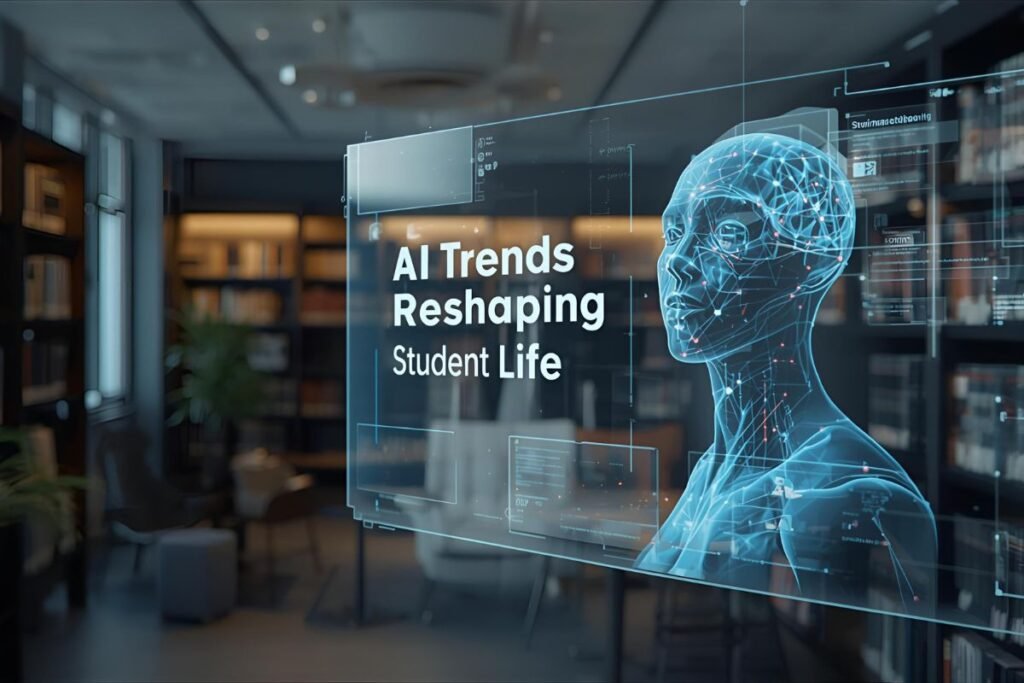
The landscape of student life is experiencing an unprecedented transformation as artificial intelligence trends reshape every aspect of the educational journey. From the moment students wake up to when they complete their final assignments, AI Trends Transforming Student Life is silently revolutionizing how learning happens, making education more personalized, efficient, and accessible than ever before.
In 2025, we’re witnessing a paradigm shift where traditional classroom dynamics are being enhanced by intelligent systems that understand individual learning patterns, predict academic challenges, and provide real-time support. These AI trends in education are not just futuristic concepts – they’re tangible realities that millions of students worldwide are experiencing daily.
The integration of machine learning algorithms and smart educational tools has created an ecosystem where students can access personalized tutoring 24/7, receive instant feedback on their work, and navigate their academic journey with AI-powered guidance systems. This digital revolution extends beyond academics, influencing campus life, student services, social interactions, and career preparation.
Understanding these transformative AI trends is crucial for students, educators, and institutions looking to stay competitive in an increasingly digital world. The following seven trends represent the most significant ways artificial intelligence is reshaping student life, offering insights into how technology is creating more engaging, effective, and inclusive educational experiences.
Personalized Learning Pathways: AI Trends Transforming Student Life
Adaptive Learning Systems Transform Student Experiences
Personalized learning powered by AI algorithms has emerged as one of the most impactful trends in student life. These sophisticated systems analyze individual learning patterns, strengths, and weaknesses to create customized educational pathways that adapt in real-time to each student’s needs.
Modern adaptive learning platforms use machine learning to track how students interact with content, identifying optimal learning speeds, preferred content formats, and knowledge gaps. This data-driven approach ensures that no student falls behind while preventing advanced learners from becoming bored with repetitive material.
AI-powered tutoring systems now provide personalized explanations, adjust difficulty levels automatically, and offer supplementary resources based on individual performance metrics. Students report higher engagement levels and improved academic outcomes when learning through these intelligent systems that understand their unique learning styles.
Implementation in Modern Educational Institutions
Universities and schools worldwide are implementing AI-driven personalized learning through platforms that integrate seamlessly with existing curriculum structures. These systems provide detailed analytics to both students and instructors, creating transparency in the learning process and enabling data-driven educational decisions.
Intelligent Virtual Assistants: 24/7 Academic Support Systems
AI Chatbots Revolutionize Student Services
Intelligent virtual assistants have become indispensable tools in modern student life, providing round-the-clock support for academic queries, administrative tasks, and general campus information. These AI-powered chatbots utilize natural language processing to understand complex student questions and provide accurate, contextual responses.
Students can now access instant help with course registration, deadline reminders, library resources, and even complex academic concepts through conversational AI interfaces. This immediate accessibility has significantly reduced wait times for student services and improved overall satisfaction with institutional support.
Smart campus assistants integrate with multiple university systems, allowing students to check grades, schedule appointments, find study spaces, and receive personalized recommendations for academic resources through simple voice or text commands.
Enhanced Learning Through Conversational AI
Beyond administrative support, AI assistants serve as study companions, helping students review material, practice concepts, and prepare for examinations. These systems can simulate tutoring sessions, provide practice problems, and offer explanations tailored to individual comprehension levels.
Predictive Analytics: Proactive Academic Intervention Systems
Early Warning Systems for Academic Success
Predictive analytics powered by AI technology represents a revolutionary approach to student success, identifying at-risk students before they face serious academic challenges. These systems analyze multiple data points including attendance patterns, assignment submission rates, engagement metrics, and performance trends to predict potential difficulties.
Machine learning models can forecast which students are likely to struggle with specific courses or concepts, enabling educators to intervene proactively with targeted support resources. This preventive approach has dramatically improved retention rates and academic outcomes across educational institutions.
Universities implementing predictive AI systems report significant reductions in dropout rates and improved student satisfaction scores. The ability to identify and address challenges early in the academic process creates a more supportive learning environment for all students.
Data-Driven Student Success Strategies
AI-powered analytics provide detailed insights into learning patterns, helping institutions optimize course design, resource allocation, and support services. Students benefit from personalized recommendations for study strategies, time management techniques, and academic resources based on successful patterns identified in similar student profiles.
Automated Content Creation: AI-Enhanced Educational Materials
Dynamic Learning Resources Through Artificial Intelligence
The creation of educational content is being revolutionized by AI content generation tools that produce personalized study materials, practice questions, and interactive learning resources. These artificial intelligence systems can generate thousands of unique practice problems, create summarized notes from lectures, and develop custom study guides tailored to individual student needs.
AI-powered content creation ensures that learning materials remain fresh, relevant, and aligned with current curriculum standards. Students benefit from access to unlimited practice resources that adapt to their specific learning objectives and knowledge levels.
Modern educational AI tools can transform textbook content into interactive multimedia experiences, create visual aids for complex concepts, and generate alternative explanations for difficult topics, accommodating diverse learning preferences and styles.
Personalized Study Materials Generation
Students can now request customized study materials based on their specific areas of weakness or interest. AI systems analyze course content, student performance data, and learning objectives to create targeted resources that maximize study efficiency and retention rates.
Smart Campus Technology
Connected Campus Ecosystems Enhance Student Experience
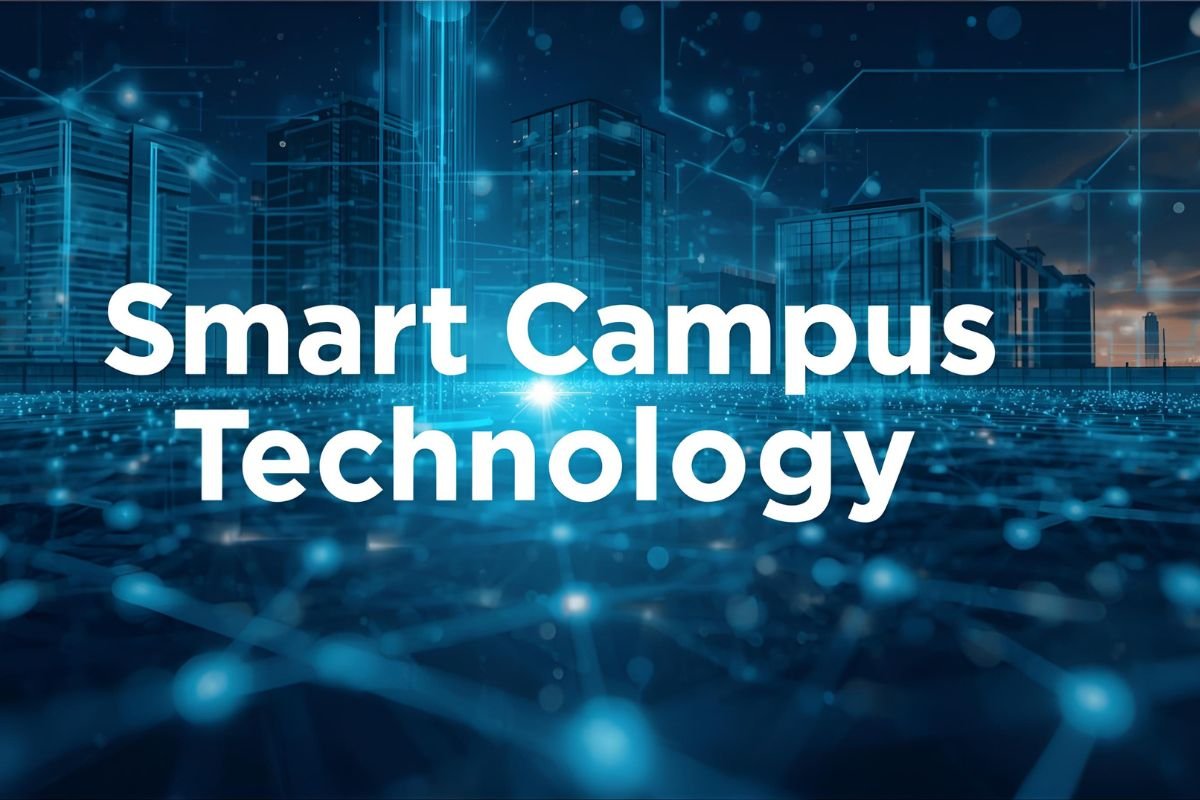
The integration of Internet of Things (IoT) devices with AI technology is creating intelligent campus environments that respond dynamically to student needs. Smart campus systems utilize sensors, beacons, and connected devices to optimize everything from classroom environments to campus navigation.
Students experience enhanced convenience through AI-powered campus apps that provide real-time information about parking availability, dining hall wait times, library occupancy, and optimal study spaces. These systems learn from usage patterns to predict and prevent congestion in popular areas.
Smart building technology automatically adjusts lighting, temperature, and acoustics in learning spaces based on occupancy and activity levels, creating optimal environments for different types of academic work and study sessions.
Seamless Integration of Physical and Digital Learning Spaces
AI-driven campus infrastructure bridges the gap between physical and digital learning environments, enabling seamless transitions between in-person and online educational activities. Students can access digital resources through proximity sensors, receive location-based notifications about campus events, and navigate complex university facilities with AI-powered wayfinding systems.
Advanced Assessment and Feedback Systems
Real-Time Evaluation Through Artificial Intelligence
Traditional assessment methods are being transformed by AI-powered evaluation systems that provide immediate, detailed feedback on student work. These systems can analyze written assignments, mathematical solutions, coding projects, and even creative work to provide comprehensive assessments that go beyond simple right-or-wrong evaluations.
Automated grading systems utilizing natural language processing can evaluate essay quality, argumentation strength, and writing style while providing constructive feedback for improvement. This immediate feedback loop accelerates learning and helps students understand their mistakes in real-time.
AI assessment tools can detect plagiarism more effectively than traditional methods, identify areas where students need additional support, and track progress over time to show learning trajectories and improvement patterns.
Comprehensive Performance Analytics
Students receive detailed analytics about their academic performance, including strengths, weaknesses, and personalized recommendations for improvement. These AI-generated insights help students make informed decisions about study strategies, course selection, and career planning.
Career Guidance and Job Market Preparation
AI-Powered Career Development Systems
Artificial intelligence is revolutionizing career preparation by providing students with personalized guidance based on their academic performance, interests, skills, and current job market trends. AI career advisors analyze vast amounts of employment data to provide accurate insights about career prospects and required skills.
Students benefit from AI-powered resume optimization, interview preparation tools, and skill gap analysis that helps them prepare effectively for their chosen career paths. These systems can simulate interview scenarios, provide feedback on responses, and suggest areas for professional development.
Machine learning algorithms match student profiles with relevant internship opportunities, job openings, and networking events, creating more efficient pathways from education to employment.
Future-Ready Skill Development
AI systems continuously analyze job market trends and industry requirements to recommend relevant courses, certifications, and skill development opportunities. This proactive approach ensures that students graduate with market-relevant competencies and competitive advantages in their chosen fields.
Read More: Free Adult Education 7 Amazing Breakthroughs in 2025
Conclusion
The seven AI trends discussed above represent just the beginning of a comprehensive transformation in student life. As artificial intelligence technology continues to evolve, we can expect even more innovative applications that will further personalize, streamline, and enhance the educational experience.
Students who embrace these AI-powered tools and systems will find themselves better equipped to succeed in an increasingly digital world. The key to maximizing these benefits lies in understanding how to effectively integrate artificial intelligence into daily academic routines while maintaining the human elements that make education meaningful.
Educational institutions must continue investing in AI infrastructure and training to ensure that all students can access and benefit from these technological advances. The future of education is undoubtedly intertwined with artificial intelligence, and those who adapt quickly will thrive in this new landscape.
The revolutionary changes brought by AI in education are creating more inclusive, efficient, and effective learning environments that prepare students for success in the digital age. As we move forward, the integration of artificial intelligence in student life will continue to evolve, offering even more sophisticated tools and systems that enhance the educational journey.
FAQs
1. How is AI technology currently being implemented in universities?
AI technology in universities includes personalized learning platforms, intelligent tutoring systems, predictive analytics for student success, automated grading systems, and smart campus infrastructure. Most institutions are gradually integrating these technologies into existing systems to enhance rather than replace traditional educational methods.
2. Will AI replace human teachers and professors?
Artificial intelligence is designed to augment and support human educators, not replace them. AI tools handle routine tasks like grading and administrative work, allowing teachers to focus on creative instruction, mentorship, and building meaningful relationships with students. The human element remains crucial for emotional support, critical thinking development, and complex problem-solving guidance.
3. How can students prepare for an AI-integrated educational environment?
Students should develop digital literacy skills, learn to work effectively with AI-powered tools, and maintain adaptability as technologies evolve. Focusing on critical thinking, creativity, and emotional intelligence will remain important as these skills complement AI capabilities rather than compete with them.
4. What are the privacy concerns related to AI in student life?
AI systems in education collect and analyze significant amounts of student data, raising concerns about privacy, data security, and algorithmic bias. Institutions must implement robust data protection measures, ensure transparency in AI decision-making, and provide students with control over their personal information.
5. How will AI trends in education evolve in the next five years?
Future developments will likely include more sophisticated personalized learning systems, advanced virtual and augmented reality integration, improved natural language processing for better human-AI interaction, and more comprehensive predictive analytics for academic and career guidance. The focus will be on creating more intuitive, accessible, and effective AI-powered educational tools.