Essential Mobile Fleet Maintenance Tips for Heavy-Duty Vehicles
Proactive fleet maintenance tips to reduce breakdowns, improve safety, extend vehicle life, and cut costs using inspections, training, and technology.


Key Takeaways
- Create a proactive maintenance schedule to prevent last-minute breakdowns.
- Daily inspections help identify issues before they grow into major repairs.
- Leveraging technology, checklists, and ongoing training ensures consistent safety and compliance.
Fleet reliability is a critical asset for any logistics or transportation business. Keeping heavy-duty vehicles at peak performance requires proactive planning and regular care. Utilizing a heavy duty mobile mechanic is one of the most practical ways to minimize downtime and prevent the costly domino effect of unexpected breakdowns on your routes. Proactive fleet maintenance means safer roads, lower repair bills, and longer-lasting vehicles.
Maintenance routines go beyond basic oil changes and checklists—they foster a company culture of safety, accountability, and efficiency. With the right approach and tools, fleet managers can better control costs, keep service schedules on track, and help drivers focus on the road ahead. Preventive steps not only make financial sense but also make your operations more resilient to outside disruption.
Every day, your drivers are the first line of defense against malfunctions. By empowering them, streamlining service routines, and adopting digital tracking solutions, you can dramatically reduce emergency repairs and increase vehicle lifespan.
Establish a Preventive Maintenance Schedule
Proactive care is the root of fleet longevity. Set clear intervals for inspections, oil changes, brake checks, and fluid top-offs to ensure optimal vehicle maintenance. Rely on vehicle mileage and manufacturer recommendations to decide your schedule, but tailor it to your unique operating environment. Having access to emergency roadside assistance is also essential, as it provides quick support in the event of breakdowns, flat tires, or other unexpected issues. This systematic approach catches problems early, reduces risk, and minimizes unscheduled downtime. The Federal Motor Carrier Safety Administration (FMCSA) provides reliable vehicle maintenance basics for fleets of all sizes.
Conduct Daily Vehicle Inspections
Daily pre-trip and post-trip checks are crucial for identifying leaks, tire damage, lighting issues, and other potential problems. Equip drivers with digital or paper checklists tailored to your specific fleet and legal requirements. Encourage open channels for employees to report any red flags immediately, and ensure that supervisors act on those reports—boosting morale while ensuring compliance with DOT regulations.
Monitor Tire Health Consistently
Tires account for a significant percentage of fleet operational expenses, and even a minor oversight can lead to accidents or roadside breakdowns. Regular inspections for inflation, tread depth, sidewall condition, and balanced wear patterns help minimize the risk of blowouts and maximize efficiency. Installing telematics-enabled tire pressure monitoring systems (TPMS) can automate alerts and help you extend tire life across your entire fleet.
Train Drivers on Basic Maintenance Protocols
Your drivers are invaluable partners in protecting the fleet. Invest in onboarding and ongoing training so they can recognize dashboard alerts, spot fluid leaks, and hear unusual noises. Leverage digital platforms to track training completion and cross-reference it with recurring vehicle issues for targeted improvement. The American Trucking Associations emphasizes how maintenance-minded drivers improve vehicle reliability and reduce accidents.
Implement a Maintenance Checklist
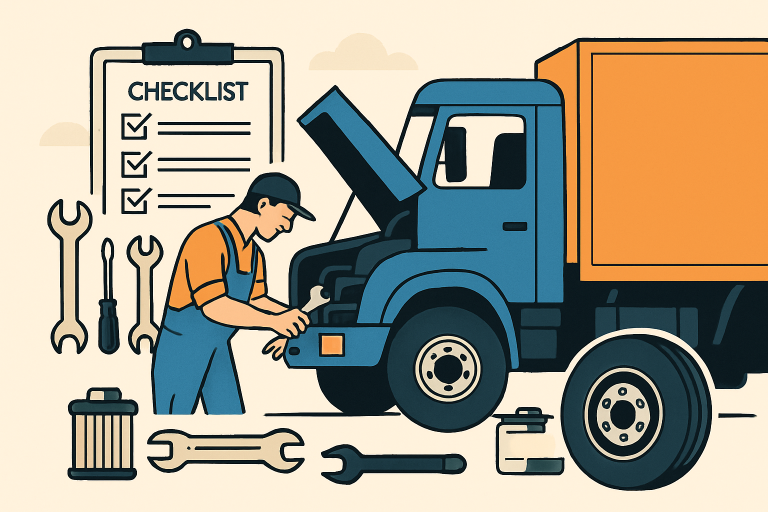
A standardized checklist ensures that all stakeholders are on the same page. Cover essentials like brakes, lights, mirrors, HVAC, suspension, and emissions systems. Digital forms in your fleet management app ensure accountability, with timestamps and user tracking to guarantee every task is completed—especially crucial during shift changes or high-pressure scenarios.
Use Fleet Maintenance Software for Scheduling
Manual tracking quickly becomes overwhelming with a larger fleet. Robust fleet maintenance software enables automatic scheduling, maintenance history recall, technician assignments, and instant notifications when something’s amiss. This digitized approach streamlines workflows, reducing the likelihood of neglected services or regulatory noncompliance.
Monitor Engine Diagnostics with Telematics
Modern telematics platforms transform raw data into actionable insights, enabling you to monitor engine hours, fault codes, idle time, and fuel consumption. Automated diagnostics flag emerging problems faster than traditional reporting, minimizing engine failures and supporting predictive maintenance strategies. Integrate these systems to trigger digital work orders when issues are detected.
Keep Accurate Maintenance Records
Thorough documentation satisfies DOT requirements and streamlines audits, warranty claims, and long-term budgeting. Archive detailed service logs digitally, making it easy to reference history by vehicle, date, or technician. Centralized recordkeeping using Computerized Maintenance Management Systems (CMMS) ensures you never lose crucial information during compliance checks or insurance claims.
Stock Essential Spare Parts
Downed vehicles shouldn’t be held hostage by supply chain delays. Identify commonly replaced parts, such as filters, bulbs, belts, and hoses, and maintain a secure inventory at strategic locations. Utilize your fleet platform’s inventory module to track usage, set reorder points, and efficiently prepare for recurring maintenance, thereby keeping your vehicles in service longer and reducing costly downtime.
Schedule Periodic Deep Inspections
Beneath the surface, wear and tear accumulates in critical systems. Go beyond daily checks by regularly scheduling deep-dive inspections, focusing on transmissions, suspension components, braking systems, and electrical wiring. Quarterly or biannual professional evaluations give you time to resolve issues before they disrupt your schedule.
Committing to these maintenance fundamentals empowers your operation to run more smoothly, safely, and with fewer unexpected disruptions. Consistency across your processes—supported by technology and a proactive mindset—translates into real-world savings and greater reliability for every mile traveled.
FAQs
Q: Why is a preventive maintenance schedule important?
It helps catch problems early, preventing breakdowns and reducing costly downtime.
Q: What should drivers check during daily inspections?
Look for leaks, tire issues, lights/brakes problems, and report red flags immediately.
Q: How do tires impact fleet reliability and costs?
Poor tire health can cause blowouts and breakdowns; regular checks improve safety and efficiency.
Q: How can technology improve fleet maintenance?
Maintenance software and telematics automate scheduling, track faults, and trigger faster repairs.
Q: Why keep accurate maintenance records and spare parts?
Records support compliance and audits, while stocked parts reduce delays when repairs are needed.
Also Read: Essential Considerations for Selecting a Reliable Hydraulic Mobile Hose Repair Service